SNAP for Seniors in 2026: Special Rules, Medical Deductions & Higher Income Limits
If you are 60 or older, SNAP works differently for you — and almost always in your favor. Higher income limits, no shelter deduction cap, medical expense deductions, and a simpler application process. Here is exactly what changes after your 60th birthday.

Wasim Akram
Published 2026-07-22
Most people who hit 60 never bother applying for SNAP because they assume they earn too much or that the paperwork will be too complicated. That is the most expensive misconception in the entire food assistance program. The truth is, USDA built special rules into SNAP specifically to make it easier for older Americans to qualify and to receive more help each month. If you are 60 or older — or live with someone who is — the math changes in your favor in ways that can put an extra $100 to $300 a month on your EBT card.
This guide breaks down every senior-specific rule for the 2026 fiscal year (October 2025 through September 2026). No jargon. No government-speak. Just the actual numbers, the actual deductions, and the actual steps to apply.
What Counts as a "Senior" for SNAP?
SNAP uses a simple cutoff: anyone in your household who is 60 or older by the date of your application triggers the senior rules. You do not have to be retired. You do not have to be on Social Security. You do not have to be disabled. You just have to be 60.
Here is the part that trips people up. If you live with your adult daughter and her kids, and you are 62, the entire household still gets the senior rules applied — even though most of the people in the home are under 60. SNAP looks at whether any household member is elderly or disabled. One yes unlocks the better deductions for everyone in that case file.
Quick check
If anyone in your home is 60 or older, or receives disability benefits like SSI or SSDI, your household qualifies for the senior/disabled deductions. You do not need to be the head of household for this to apply.
The Three Big Changes After Age 60
Once the senior rules kick in, three specific things change in your SNAP calculation. Each one works in your favor, and together they can mean the difference between qualifying and getting denied — or between a $50 minimum benefit and a $250 monthly allotment.
Higher Net Income Limit
Households with a senior or disabled member skip the gross income test entirely. You only need to pass the net income test.
No Shelter Deduction Cap
Most households are capped at $712/month for shelter costs. Senior households have no cap — meaning high rent or property tax finally works in your favor.
Medical Expense Deduction
Out-of-pocket medical costs over $35/month are deductible. For seniors with prescriptions and copays, this is often the single biggest boost.
The Net Income Test: Skipping the First Hurdle
Under standard SNAP rules, your household has to pass a gross income test before anything else happens. Your total income before deductions gets compared against 130% of the Federal Poverty Level. For a single person in 2026, that limit is $1,580 per month. For a family of four, it is $3,250.
But households with a senior or disabled member get to skip that test entirely. You only need to pass the net income test, which is set at 100% of FPL — significantly higher after deductions. For a single senior in 2026, that is $1,215 per month net. For a two-person senior household, $1,644.
What this means in practice: a 67-year-old living alone who earns $2,000 a month from a part-time job and Social Security might still qualify, because after the standard deduction, the earned income deduction, the shelter deduction, and the medical expense deduction, their net income could drop well below $1,215. Without the senior rule, they would have been automatically denied at the gross income step.
If you live in a state that uses Broad-Based Categorical Eligibility, the gross income limit is already raised, so the senior rule matters less. But in non-BBCE states — and there are still a handful — skipping the gross income test can be the difference between approval and denial. You can check whether your state uses BBCE for higher SNAP income limits before you apply.
The Medical Expense Deduction: The One Most Seniors Miss
This is the deduction that quietly puts the most money back in seniors' pockets, and it is also the one most caseworkers forget to mention. If anyone in your household is 60 or older (or disabled), you can deduct out-of-pocket medical expenses that exceed $35 per month.
The list of qualifying expenses is long. It is not just doctor visits and prescription copays. It includes:
Prescription copays and out-of-pocket medication costs
Doctor, dentist, and specialist visit copays
Medicare Part B and Part D premiums
Over-the-counter medications prescribed by a doctor
Dental work, eye exams, glasses, and hearing aids
Mileage to and from medical appointments
Hospital parking fees and toll costs for treatment
In-home care attendant costs not covered by insurance
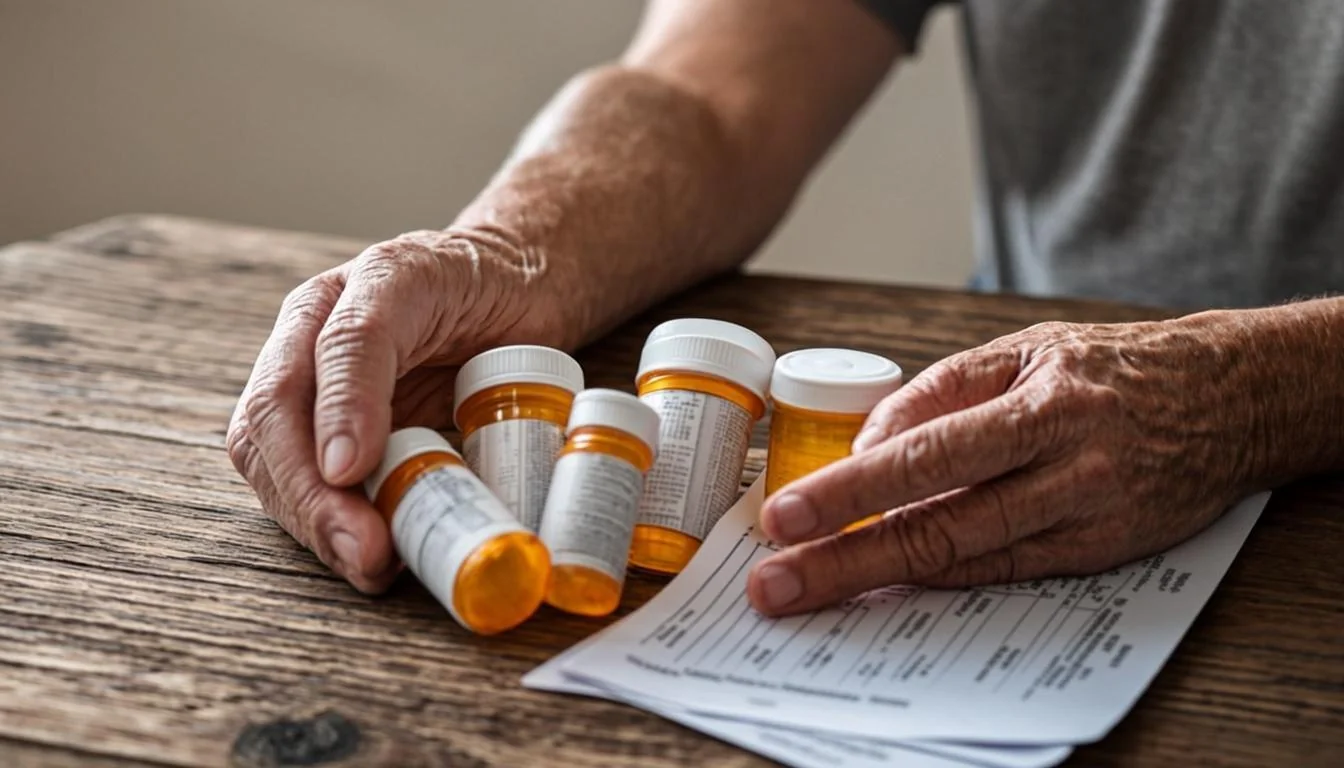
The catch is that you have to actually document these expenses. Most caseworkers will ask for receipts, pharmacy printouts, or a Medicare summary notice. Many seniors leave hundreds of dollars on the table simply because they did not realize they could claim their Part B premium — which is $185 per month in 2026 — as a deduction. That alone wipes out the $35 threshold and adds roughly $45 a month to your SNAP benefit after the 30% net income calculation.
Standard Medical Deduction shortcut
Some states offer a Standard Medical Deduction (SMD) — a flat amount (often $155 to $170) for seniors who do not want to track every receipt. If your actual medical costs are below the SMD, you might still claim the standard amount. Ask your caseworker which option gives you more money.
The Shelter Deduction: Why No Cap Matters
For most SNAP households, the shelter deduction is capped at $712 per month for 2026. That means even if you pay $1,400 in rent and utilities, only $712 of it counts toward reducing your net income. The rest is invisible to the calculation.
Senior and disabled households do not have that cap. None. Zero. Every dollar of shelter cost above 50% of your income after other deductions counts toward lowering your net income — and a lower net income means a higher SNAP benefit.
This is especially powerful in three specific situations. First, seniors who own their homes free and clear but pay high property taxes. Second, seniors in high-cost states like California, New York, or Massachusetts where even modest rent runs $1,800 a month. Third, seniors in assisted living or senior housing where rent includes meals they may not be able to use (SNAP can sometimes factor in those unreimbursed costs).
For a single senior paying $1,200 in rent and utilities on a $1,800 monthly income, removing the shelter cap can add $150 or more to their monthly benefit compared to a non-senior in the same situation. That is real money every single month.
A Real Example: Margaret, 68, Living Alone in Pennsylvania
Let me show you how this actually plays out. Margaret is 68, retired, and lives alone in a small apartment near Pittsburgh. Her monthly income is $1,650 from Social Security and a small pension. Her rent is $950, and her Medicare Part B premium plus average prescription copays run about $260 a month.
Under standard SNAP rules, Margaret would not even get past the gross income test in a non-BBCE state. But under the senior rules, here is what happens:
| Step | Calculation | Amount |
|---|---|---|
| Gross income | Social Security + pension | $1,650 |
| Standard deduction | 1-person household, 2026 | -$204 |
| Medical expense deduction | $260 medical - $35 threshold | -$225 |
| Shelter costs | Rent + utilities | $950 |
| 50% of income after other deductions | ($1,650 - $429) x 50% | $610 |
| Excess shelter deduction | $950 - $610 (no cap for seniors) | -$340 |
| Net income | $1,650 - $204 - $225 - $340 | $881 |
| 30% of net income | $881 x 0.30 | $264 |
| Estimated monthly SNAP benefit | $292 max - $264 | $28/month |
Wait — that number looks low because Margaret's net income is close to the maximum allotment for a single person. But here is the thing: without the senior deductions, her net income would have been much higher, and her benefit would have been $0. She would have been denied entirely. The senior rules turned a denial into a $28 monthly benefit, which adds up to $336 a year.
And if her rent were $1,200 instead of $950, the no-cap shelter deduction would have pushed her benefit up to roughly $130 per month. Same income, same age, just different rent. That is how much the shelter deduction matters for seniors.
If you want to see how the numbers work for your own situation — your state, your rent, your medical costs — you can use our food stamp eligibility calculator and toggle the "Members age 60+ or disabled" option to see the difference it makes.
Simpler Application Process for Seniors
Beyond the math, SNAP also gives seniors a faster, less paperwork-heavy path to approval. These streamlining rules exist because USDA recognized that the standard application process was keeping older Americans out of the program.
Longer certification period
Seniors and disabled households can qualify for up to 36 months of certification, instead of the standard 12 months. That means one application covers you for three years, with just a short renewal form at the end.
Phone interview instead of in-person
Most states will waive the in-person interview requirement for seniors who have a hard time traveling. You can request a phone interview when you submit your application.
Authorized representative
If you have trouble filling out forms or remembering appointments, you can designate a trusted family member, friend, or social worker to handle the SNAP application on your behalf.
Simplified reporting
Senior households usually only need to report changes in income or household size — not minor fluctuations. This reduces the chance of accidentally losing benefits over a paperwork issue.
Common Reasons Seniors Get Denied (And How to Avoid Them)
Even with the special rules, plenty of seniors still walk away empty-handed. Most of the time, it is not because they do not qualify — it is because of avoidable mistakes during the application process.
The biggest one is forgetting to count everyone in the household. If your adult son lives with you and pays rent, but you buy and prepare food separately, you may be able to apply as a separate household. This matters because adding a high-earning adult to your SNAP case can push you over the income limit. Talk to your caseworker about whether you qualify as a separate household under the "purchase and prepare food separately" rule.
The second biggest issue is not documenting medical expenses. Many seniors assume Medicare covers everything, so they do not bother saving receipts for copays, prescriptions, or dental work. But those out-of-pocket costs are exactly what feeds the medical expense deduction. Keep a shoebox or folder for every medical receipt — even the $4 copays add up over a year.
Third is failing to claim the Medicare Part B premium as a medical expense. This is a $185 monthly deduction that most seniors are entitled to but never claim. Mention it explicitly on your application.
Fourth is under-reporting shelter costs. Property taxes, homeowner's insurance, and condo fees all count as shelter costs for senior homeowners. So does the cost of required home repairs if they are medically necessary (like a wheelchair ramp). Do not just put down "rent" — list every housing-related expense you pay.
Finally, the silent killer: not applying at all. A 2023 USDA report found that only 47% of eligible seniors actually enroll in SNAP, compared to 86% of eligible children. The most common reason cited was "I did not think I qualified." If you are reading this article and wondering whether to apply, the answer is almost certainly yes — apply. The worst outcome is a denial letter, which costs you nothing but a stamp.
What You Can Buy With SNAP as a Senior
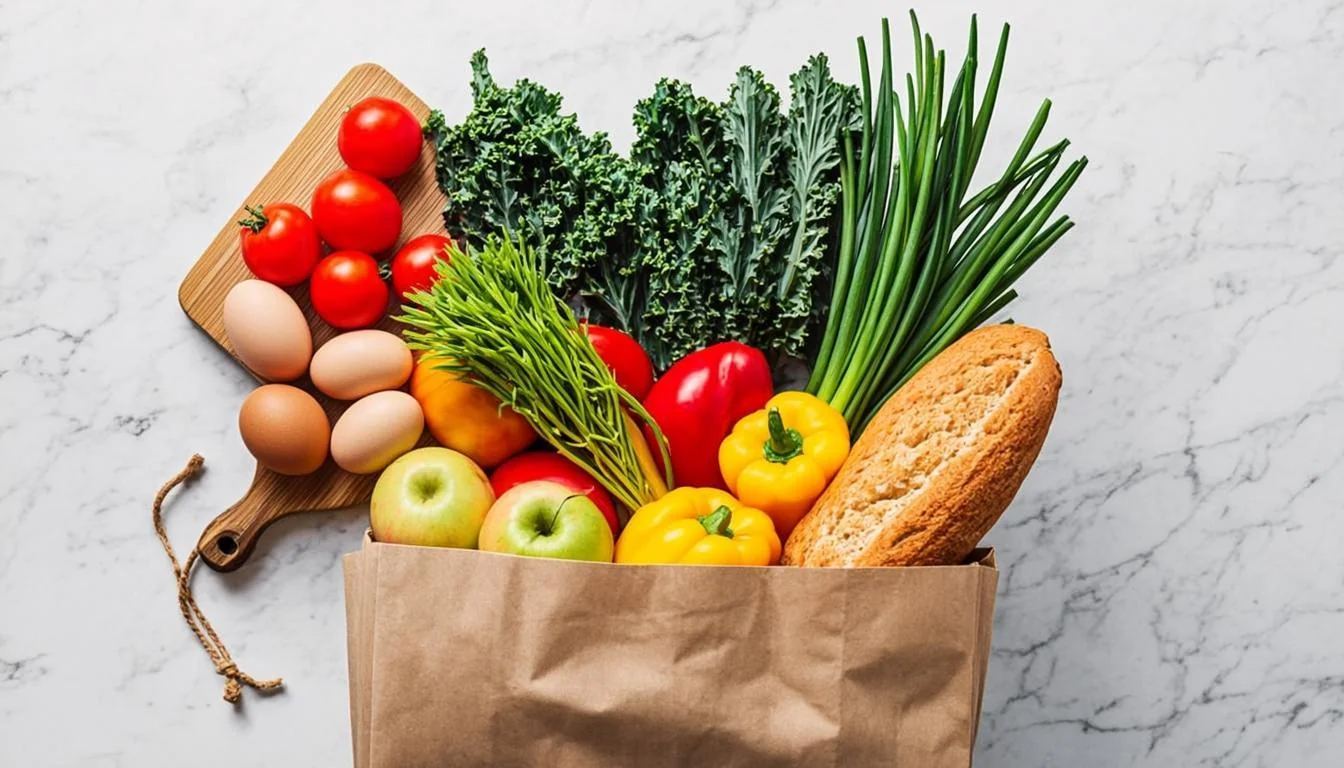
SNAP benefits work the same way for seniors as for everyone else. The EBT card can be used at most grocery stores, many farmers markets, and even some online retailers like Amazon and Walmart. You can buy fruits, vegetables, meat, dairy, bread, cereals, snacks, and even seeds and plants that produce food.
You cannot buy hot prepared foods, alcohol, tobacco, vitamins, household supplies, or pet food. However, some states participate in the Restaurant Meals Program, which allows elderly, disabled, and homeless SNAP recipients to use their benefits at approved restaurants. If you have trouble cooking at home, ask your local SNAP office whether your state offers this option.
How to Apply: A Step-by-Step Walkthrough
The application process for seniors is designed to be friendlier than the standard path, but you still need to bring the right documents. Here is what to gather before you start.
First, collect proof of identity — a driver's license, state ID, or passport. Second, proof of age — the same ID usually works, or a birth certificate if asked. Third, proof of income — Social Security award letter, pension statement, and any pay stubs if you are still working part-time. Fourth, proof of shelter costs — current lease, mortgage statement, property tax bill, and recent utility bills. Fifth, proof of medical expenses — pharmacy printouts, Medicare summary notices, and receipts for any out-of-pocket medical costs.
You can apply online through your state's SNAP portal, by phone in many states, or in person at your local social services office. Most applications are processed within 30 days, but seniors may qualify for expedited service (7-day processing) if their income and resources are very low. After you submit, you will have a brief interview — usually by phone for seniors — where the caseworker reviews your documents and asks about your household situation.
If approved, you will receive an EBT card in the mail within a few days, preloaded with that month's benefit. Going forward, benefits are loaded on the same day each month, usually based on your case number or last name.
The Bottom Line
The SNAP program was specifically redesigned to help older Americans stay fed without having to choose between groceries and medication. The rules are better. The deductions are bigger. The application is simpler. The only thing standing between most seniors and $100 to $300 a month in food assistance is the act of applying.
If you are 60 or older, take ten minutes today to gather your documents. If your parent or grandparent is 60, sit down with them this week and help them fill out the application. The math is on your side. The rules are on your side. The only thing left is to claim what is yours.
Want to see what your numbers look like before you apply? Use our free SNAP calculator — it takes your state, income, household size, and medical costs into account and shows you an estimate in under two minutes. Or read our full breakdown of how SNAP benefits are calculated step by step to understand the formula behind your estimate.